Google Ads is one of the fastest ways to generate clients online.
Unlike many marketing channels, it targets people who are already searching for a solution. When campaigns are structured correctly, Google Ads lead generation can produce qualified prospects in a matter of days.
The challenge is not running ads, it’s building a strategy that converts clicks into paying clients.
This guide explains how to use a Google Ads conversion strategy to generate leads and acquire clients within the first 30 days.
Why Google Ads Works for Lead Generation
Google Ads operates on search intent. People actively search for services, solutions, or providers when they have an immediate need.
This makes PPC lead generation different from social advertising, where users are usually not looking for a solution yet.
When structured properly, Google Ads allows businesses to:
- Reach high-intent prospects
- Capture demand at the moment of search
- Generate predictable leads
- Scale client acquisition quickly
That’s why many businesses rely on Google Ads as their primary customer acquisition channel.
The 30-Day Google Ads Lead Generation Plan
A realistic timeline for getting clients through Google Ads involves three phases: setup, testing, and optimization.
| Phase | Goal | Key Actions |
| Week 1 | Campaign setup | Keyword research, campaign structure, landing page preparation |
| Week 2 | Initial traffic | Launch ads and gather data |
| Week 3 | Optimization | Adjust targeting, bids, and ad copy |
| Week 4 | Lead scaling | Increase budget on best-performing keywords |
This structured approach allows advertisers to refine campaigns while generating leads early.
Step 1: Choose High-Intent Keywords
The most important part of Google Ads lead generation is selecting the right keywords.
Focus on search terms that indicate a clear buying intent, such as:
- “service near me”
- “best provider for”
- “hire [service] company”
- “consultation for [problem]”
Avoid broad informational searches that attract traffic but not clients.
High-intent keywords improve lead quality and help get clients with Google Ads faster.
Step 2: Build a Focused Campaign Structure
A strong Google Ads strategy 2026 emphasizes tight campaign organization.
Instead of placing many keywords in one ad group, organize campaigns by specific services or offers.
For example:
- Campaign 1 – Service A
- Campaign 2 – Service B
- Campaign 3 – High-value keyword group
This structure improves relevance between keywords, ads, and landing pages, which increases quality score and reduces cost per lead.
Step 3: Write Ads That Match Search Intent
Your ad copy must directly address the problem the user is searching for.
Effective ads usually include:
- The main keyword in the headline
- A clear benefit or solution
- Trust indicators such as experience or results
- A direct call to action
For example:
Headline: Google Ads Lead Generation for B2B Companies
Description: Get qualified leads within 30 days. Book a strategy call today.
Ad relevance is a major factor in any Google Ads expert guide because it improves click-through rate and campaign efficiency.
Step 4: Use a High-Converting Landing Page
Even strong ads fail if they send traffic to weak pages.
Landing pages for PPC lead generation should focus on one action.
A good landing page includes:
- Clear headline aligned with the ad
- Short explanation of the service
- Social proof or case studies
- Simple lead form or booking option
Reducing distractions significantly improves conversions.
Step 5: Track and Optimize Conversions
Successful campaigns rely on constant optimization.
Track metrics such as:
- Conversion rate
- Cost per lead
- Cost per conversion
- Click-through rate
These insights help improve the Google Ads conversion strategy over time.
Small adjustments in keywords, ad copy, and landing pages can dramatically increase lead generation efficiency.
Step 6: Use Negative Keywords to Reduce Waste
Many advertisers lose budget because their ads appear for irrelevant searches.
Negative keywords prevent ads from showing for terms that do not match your service.
Examples include:
- “free”
- “jobs”
- “course”
- “how to”
Filtering irrelevant traffic improves campaign efficiency and helps improve ad ROI.
Common Mistakes That Prevent Client Acquisition
Even experienced advertisers sometimes struggle to generate clients because of common errors.
Typical issues include:
- Using overly broad keywords
- Sending traffic to generic website pages
- Ignoring conversion tracking
- Scaling campaigns before optimization
Fixing these mistakes often improves results faster than increasing ad budgets.
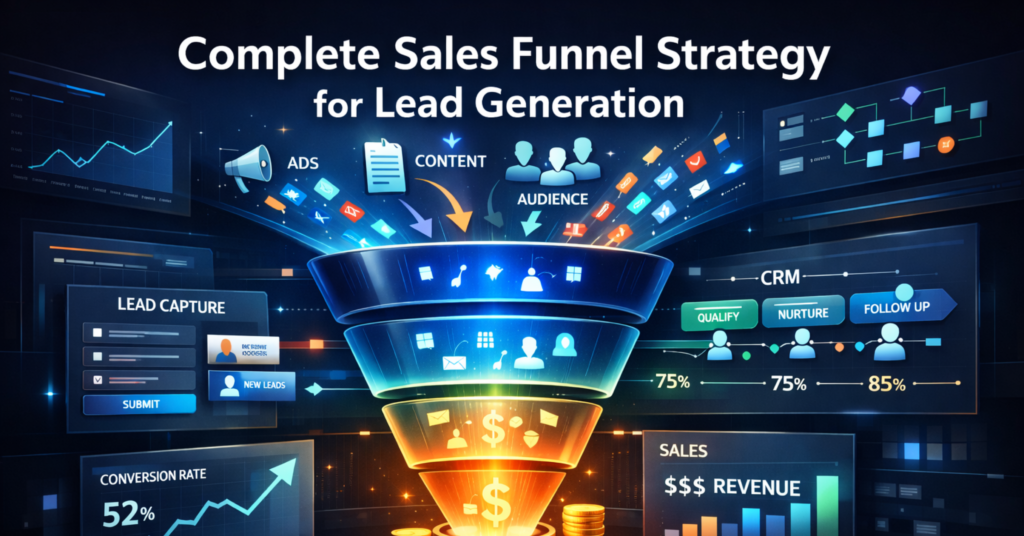
Google Ads Lead Generation Funnel
To consistently get clients with Google Ads, campaigns should follow a simple funnel.
| Stage | Action |
| Search | User searches for a solution |
| Ad Click | Ad matches the search intent |
| Landing Page | Clear offer presented |
| Lead Capture | Form or booking completed |
| Follow-Up | Sales process converts lead |
This funnel ensures each stage contributes to client acquisition.
Final Takeaway
Getting clients through Google Ads is not about running more ads, it’s about building a structured system for lead generation.
When businesses combine:
- High-intent keyword targeting
- Strong ad relevance
- Conversion-focused landing pages
- Continuous optimization
Google Ads becomes one of the fastest ways to generate qualified leads.
With the right strategy, Google Ads lead generation can start producing clients within the first 30 days.